How to Choose a 3-in-1 Hidden Camera Detector for B2B Privacy Projects
For authorized privacy and security inspections, a hidden camera detector should help a trained user make a structured first-pass check rather than promise certainty. B2B buyers need a product that is practical to demonstrate, understandable for end users and credible in real environments where wireless signals and reflections can create noise.
This guide explains how to evaluate a 3-in-1 detector for legitimate privacy-protection projects, hotel and vehicle checks, authorized corporate inspections, and security-reseller programs. It is written for distributors, importers, installers and OEM/ODM buyers who need a reliable way to compare features, usability and sourcing support.
Start With a Clear, Authorized Use Case
A good procurement brief begins with the project: an authorized room check, a company-vehicle inspection, a hospitality privacy program, or an after-sales product range for a security retailer. These are the practical contexts in which privacy inspection equipment can add value.
Do not buy around a single headline claim. Define who will use the detector, what they are allowed to inspect, whether they need quick training, and what kind of evidence or reporting process sits around the tool. Local privacy and communications laws should always be reviewed before deployment.
Why a 3-in-1 Detection Method Matters
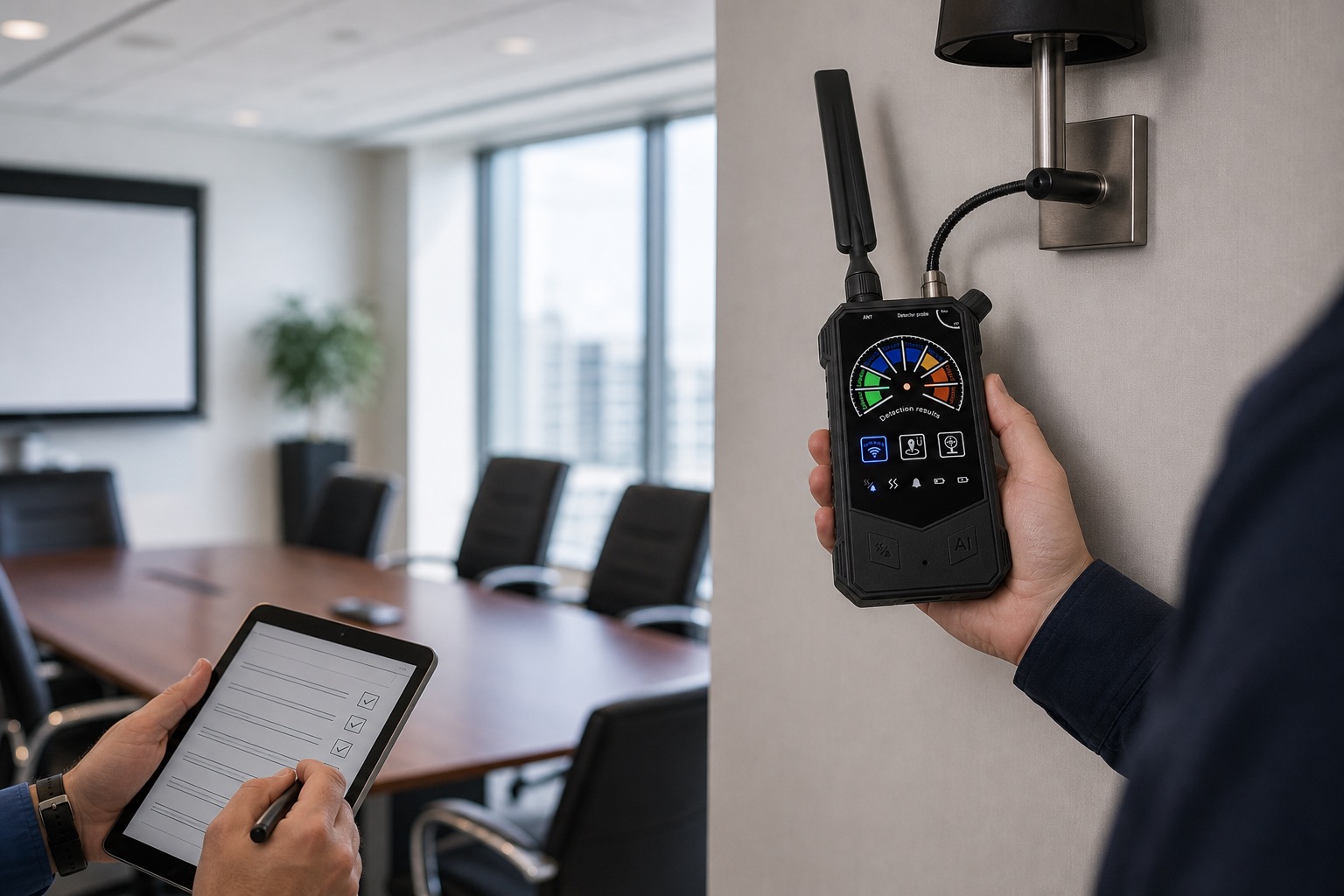
A multi-method detector gives a buyer more ways to investigate a concern during an authorized inspection. The EL-DE012 portable 3-in-1 detector combines RF wireless-signal detection, magnetic-field positioning checks and 940nm infrared-light detection. Each method answers a different practical question.
- RF scanning: helps identify active wireless transmissions in the operating environment.
- Magnetic-source checks: support a closer inspection of suspected magnetic fields or attached electronic sources.
- 940nm IR detection: helps users look for potential infrared illumination used by some camera systems.
The right expectation is not that one mode identifies every device. A professional workflow compares signals, isolates possible sources, checks the physical surroundings and documents findings. For a broader hidden camera detector range, buyers should compare how each product fits that workflow.
Evaluate RF Coverage and Sensitivity in Real Conditions
For an RF-based check, coverage and controllable sensitivity matter more than a vague claim of "high power." The EL-DE012 is specified for 10MHz to 8600MHz, covering common 1.2G, 2G, 2.4G, 3G, 4G, 5G and 5.8G operating bands. Its stated detection sensitivity is no more than 0.03mV, and the sensitivity is adjustable so an operator can narrow the search area.
In practice, WiFi routers, phones, Bluetooth products, vehicle electronics and nearby infrastructure can create interference or false alarms. A good supplier should say this clearly and provide a usable operating method: first scan the wider area, reduce sensitivity as the signal grows stronger, then inspect the likely source. This is much more useful to a reseller than a feature list with no training logic.
Check Physical Design and Field Usability
Small details determine whether a detector is returned after the first shipment or becomes a repeat-order product. Review the control layout, display readability, antenna and probe arrangement, alert options, charging method, carry accessories and the clarity of the user manual.
The EL-DE012 has a 500mAh built-in battery, a stated four-hour charging time and up to eight hours of continuous use. At approximately 160g and 117 x 60.5 x 24mm, it is compact enough for field demonstrations and standard inspection kits. Buyers should still request a sample to test handling, menu language, charging behavior and packaging before committing to volume.

Ask What the Detector Can and Cannot Do
Trustworthy B2B communication separates practical capabilities from unrealistic promises. A detector can help an authorized user locate suspicious RF activity, magnetic sources or IR reflections. It cannot replace legal authority, physical inspection skills, network analysis, or a professional investigation where the situation requires one.
This is especially important for distributors building product education. Clear limitations reduce avoidable returns, make demonstrations more credible and help end users use the product responsibly. For product details and sample discussion, review the EL-DE012 portable 3-in-1 detector page.
Build an OEM/ODM Sourcing Checklist
For private-label or long-term distribution projects, assess the supplier as carefully as the device:
- Can the supplier provide stable specifications, operating guidance and inspection information?
- Are packaging, logo, manual language and accessory options available for the target market?
- Can a sample test confirm RF response, IR checking behavior, charging and display usability?
- Are MOQ, lead time, quality checks and after-sales responsibilities explained before the order?
- Does the supplier understand that marketing must remain within lawful privacy and security use cases?
Eleshine has focused on B2B security electronics since 2009 and can discuss OEM/ODM security-electronics support around the target market, packaging and product-selection needs. New buyers can also review our guide on how to safely source security products from a new China supplier before moving from sample evaluation to bulk procurement.
Recommended Evaluation Sequence for B2B Buyers
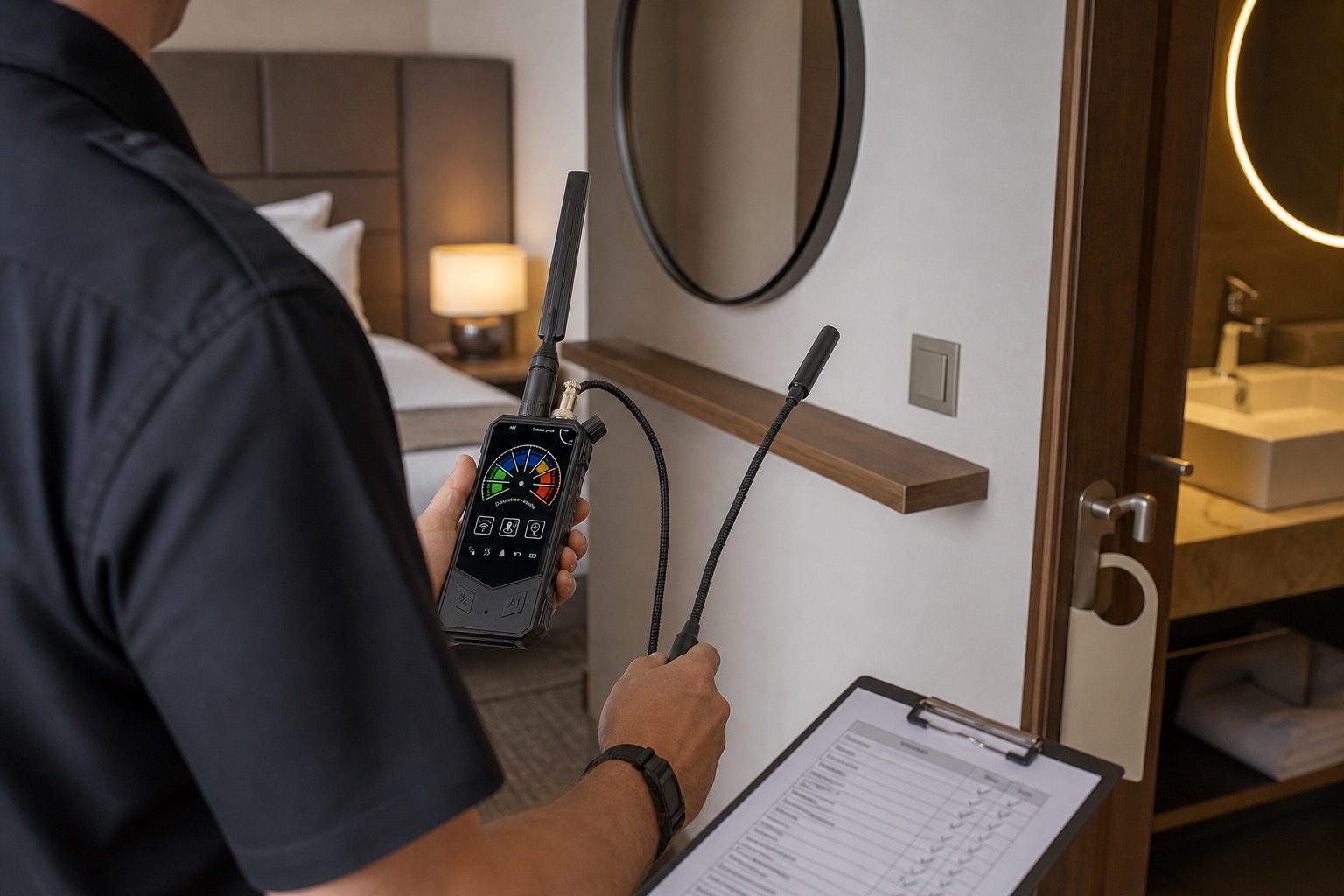
- Define the authorized inspection scenario and user training requirements.
- Compare detection methods, frequency coverage, sensitivity control and alert behavior.
- Test one sample in a realistic but lawful environment with common sources of interference.
- Review the manual, packing list, charging process and warranty expectations.
- Confirm OEM/ODM scope, MOQ, lead time and quality-control checkpoints.
- Prepare product education that explains responsible use and realistic limitations.
Conclusion
A 3-in-1 hidden camera detector is easiest to source successfully when the project brief is specific and the evaluation is honest. Choose RF, magnetic-field and infrared-check functions that fit the intended workflow; verify portability and usability with a sample; and work with a supplier who can support clear documentation and compliant market positioning.
To discuss samples, OEM/ODM requirements or a B2B quotation for anti-spy products, request a B2B quotation and sample discussion.
Frequently Asked Questions
What is a 3-in-1 hidden camera detector?
It is a privacy-inspection device that combines multiple detection approaches, such as RF wireless-signal scanning, magnetic-field checks and infrared-light checking, to support authorized security inspections.
Can an RF detector identify every hidden camera?
No. An RF detector can help locate active wireless transmissions, but a device may be inactive, wired, shielded or affected by surrounding interference. Use it as part of a lawful, structured inspection process.
Why is adjustable sensitivity important?
Adjustable sensitivity lets the operator reduce background noise and narrow a possible signal source during a close-range inspection.
What should an OEM buyer verify before placing an order?
Verify sample performance, manual clarity, packaging and logo options, MOQ, lead time, quality checks, warranty expectations and local compliance requirements.
Are hidden camera detectors legal to sell?
Laws vary by market and use case. Buyers should review local rules and position the product for lawful privacy protection, authorized security checks and responsible use.
How Eleshine Supports B2B Security Electronics Buyers: From Sample Evaluation to OEM/ODM Orders
How to Choose a Long-Standby Battery WiFi Camera for B2B Security Projects