How to Choose a 2.7K Wearable Mini Camera for Outdoor and Creator Distribution
For outdoor-electronics, creator-gear and travel-accessory distributors, a wearable mini camera should be selected as a complete selling workflow, not as a small device with an impressive resolution line. The buyer needs a model that can be demonstrated quickly, carried naturally, explained responsibly and supported after delivery. The S70 is one option to assess in that context: its supplier specification lists a 2.7K maximum setting, a 1.47-inch IPS display, a 170-degree lens angle, Type-C connectivity, microSD support up to 128 GB, a 350 mAh battery and RoadCam WiFi app support. These details are useful starting points for sample evaluation; the final retail claims must match the approved production version and target-market requirements.
Start with the channel rather than the device. A cycling shop, outdoor retailer and creator-accessory store may all use a compact camera, but their customer questions differ. The broader Eleshine product range helps a buyer map the S70 against other form factors before committing to one SKU.
Define the product role before requesting a sample
The strongest role for a wearable mini camera is hands-free personal content capture for lawful outdoor, travel and hobby activities. It is not a substitute for a dedicated action camera in every use case. A buyer should instead state one clear retail proposition: a compact first-person camera that can be carried, mounted or worn as part of an outdoor and creator accessory range, with consent-aware use and local rules respected.
Write a one-sentence assortment brief before contacting a supplier: who will buy it, what activity will be shown in product photography, which accessory will be demonstrated and what customer-support question must the sales staff answer? This protects a catalogue from becoming a group of near-identical gadgets. Buyers developing several wearable options can compare the framing used in the hands-free POV camera evaluation guide and the first-person camera range guide.
Turn the specification sheet into a sample checklist
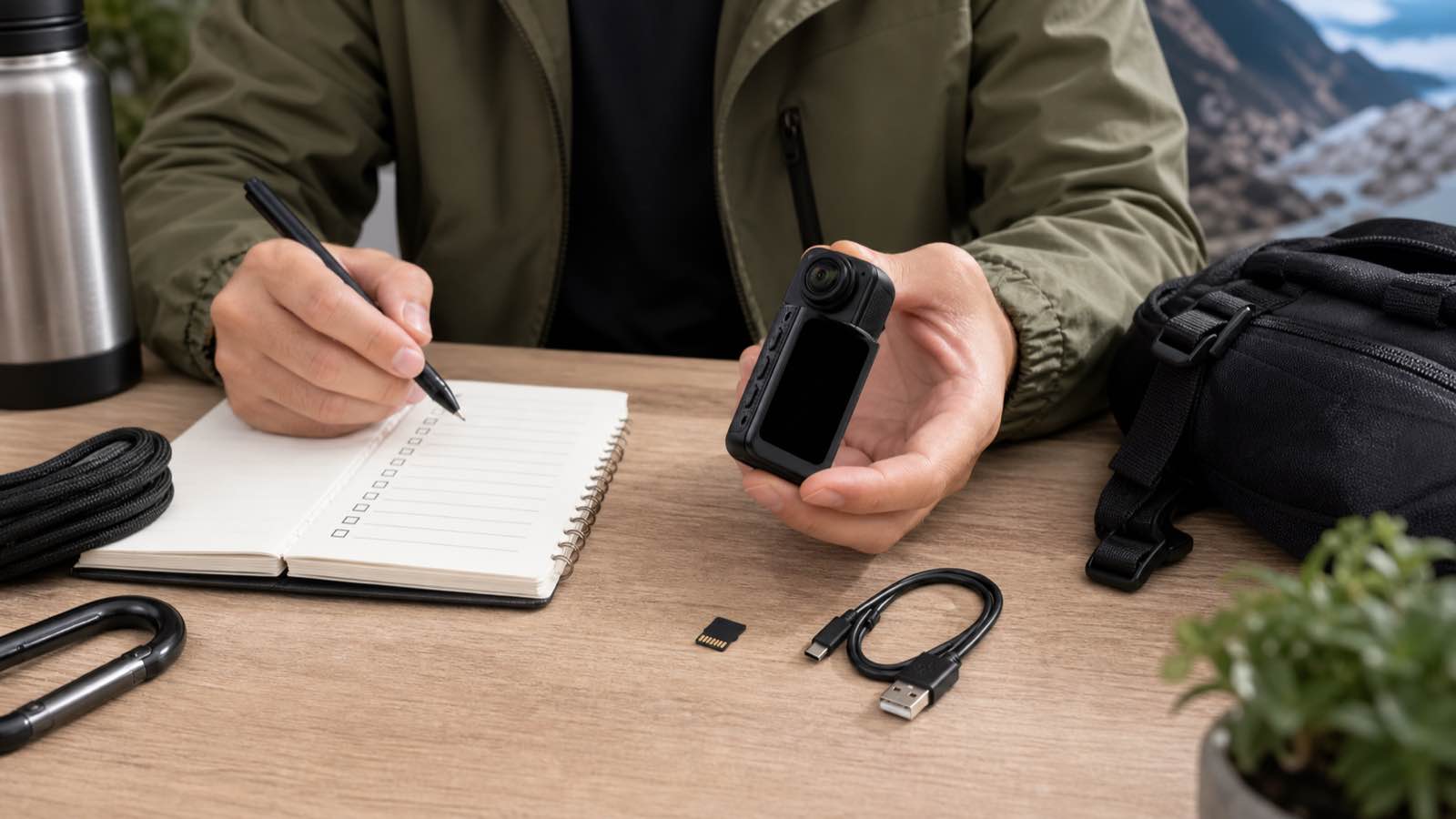
Do not approve the S70 solely because it lists 2.7K. Ask the sample team to record the selected 2.7K and 1080P modes, confirm the display is readable under the intended demonstration conditions, and check how the 170-degree view matches the retailer's planned activity. The supplied material also describes a 180-degree rotating camera position. That is worth testing physically: record whether the rotation is smooth, whether the product remains stable in the chosen carry setup and whether the image orientation is simple for a first-time user to understand.
Storage and file handling matter as much as image capture. Test a known compatible microSD card up to the documented 128 GB maximum, record a short loop-recording sequence, copy a file through Type-C and verify the retailer can explain the workflow without technical jargon. Sample records should include the card brand, capacity, recording settings, room or outdoor lighting and firmware version. This gives a product manager evidence for packaging instructions rather than relying on a generic marketing sentence.
Evaluate the wear and accessory story

The supplier list includes a belt, Type-C cable and an accessory described as a magnetic neck hanger. For distribution, the question is not simply whether those items are included. It is whether the package has one visually clear and lawful use case that can be photographed, demonstrated and supported. Test the attachment on the actual garment or accessory planned for the market. Confirm the camera angle, comfort, stability, release mechanism and basic care instructions. Do not claim that any mount is suitable for every sport, vehicle or safety situation without separate validation.
Product imagery should show the real S70 body, not a redrawn substitute. A buyer can use one scene for a daylight walk or travel moment, one for a creator desk-and-accessory workflow and one for packaging or sample review. The related touchscreen thumb camera guide is useful when deciding whether a screen, magnetic setup or more conventional action-camera form factor belongs in the same line.
Plan WiFi support as a buyer workflow
The S70 specification names RoadCam as the WiFi app. Treat that as an onboarding item to validate, not as a promise that every phone, network or market will behave identically. During sampling, document the device name shown during connection, the basic pairing sequence, live-view behavior if available, file transfer steps and any phone-permission prompts. Test the Android and iOS devices relevant to the launch market, then keep the final support sheet short and accurate.
This prevents a common distribution problem: a compact product that sells well at first but produces avoidable returns because the app journey was never tested by the reseller. A good product listing tells customers what they need to prepare, while a seller-facing guide explains when to contact technical support. Keep user privacy and local recording rules visible in the retailer's own instructions.
Build a repeatable private-label review
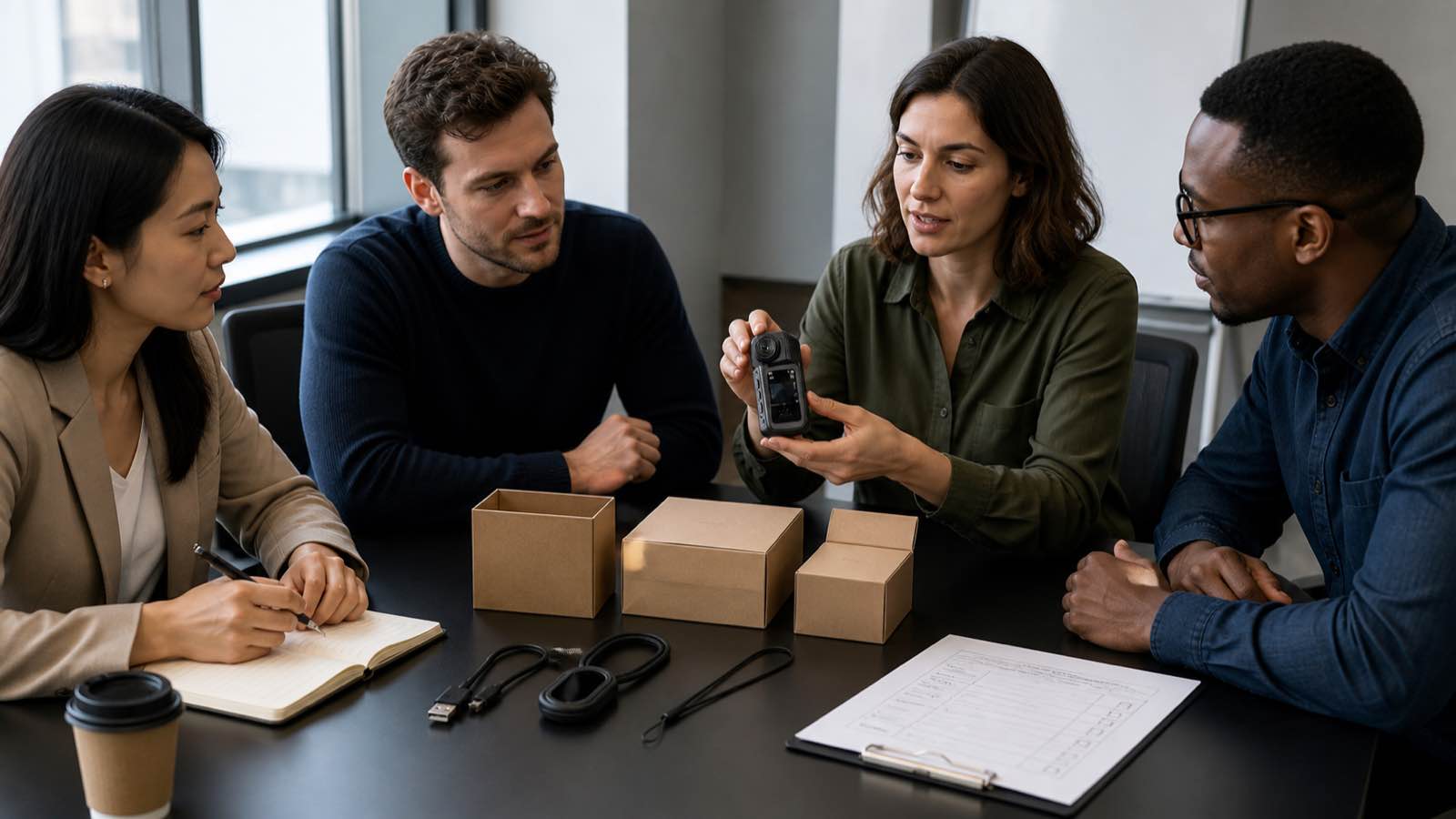
Once the sample passes the product test, move to a controlled private-label review. Discuss the factual scope: logo position, colour options, box artwork, manual language, accessory selection and barcode requirements. Do not promise a particular MOQ, lead time, certification, app change or packaging outcome before it is confirmed for the project. The Eleshine OEM/ODM overview gives the right starting context for that conversation.
Ask the prospective distributor to provide target countries, expected channel, requested configuration, annual forecast range and any required compliance documents. This lets the supplier evaluate the right production arrangement instead of treating a camera sample as a finished market plan.
Use a simple purchase decision before repeat orders
A buyer should only move toward repeat purchase after the commercial team can answer five questions: Is the use case clear? Is the selected accessory configuration documented? Can a normal customer complete setup? Does the product page use accurate imagery and wording? Are service responsibilities clear between distributor and supplier? If any answer is uncertain, extend the sample phase rather than solving the gap with broad claims.
For a tailored sample and product-line discussion, send the target market, activity focus, preferred configuration and estimated quantity through the Eleshine contact page. The result should be a buyer-ready plan, not an assumed specification.
FAQ for B2B buyers
Is 2.7K alone enough to choose a wearable mini camera?
No. Resolution is one sample-test point. Buyers should also assess lens angle, mounting workflow, display usability, storage, file transfer, app onboarding and the clarity of the retail story.
Can the S70 be positioned for any activity?
No. Position it only for the lawful activities, mounting conditions and customer instructions that the distributor has tested and can support. Do not imply universal sport, vehicle or safety suitability.
What should a private-label buyer confirm first?
Confirm the target market, final product configuration, artwork scope, manual language, accessory pack and any applicable local compliance requirements before committing to a production programme.
How to Evaluate a Clip-On POV Camera for Outdoor and Creator Distributors
How to Select Keychain Mini Cameras for Gift and Travel Accessory Buyers