How to Choose a Radar Car Alarm for Car, RV and Portable Security Projects
A radar car alarm can be a useful add-on for distributors that sell vehicle accessories, RV equipment or portable security products. The useful question is not whether one small device can prevent every loss event. The question is whether the product has a clear, testable use case, a simple user workflow and an honest product claim that a reseller can support.
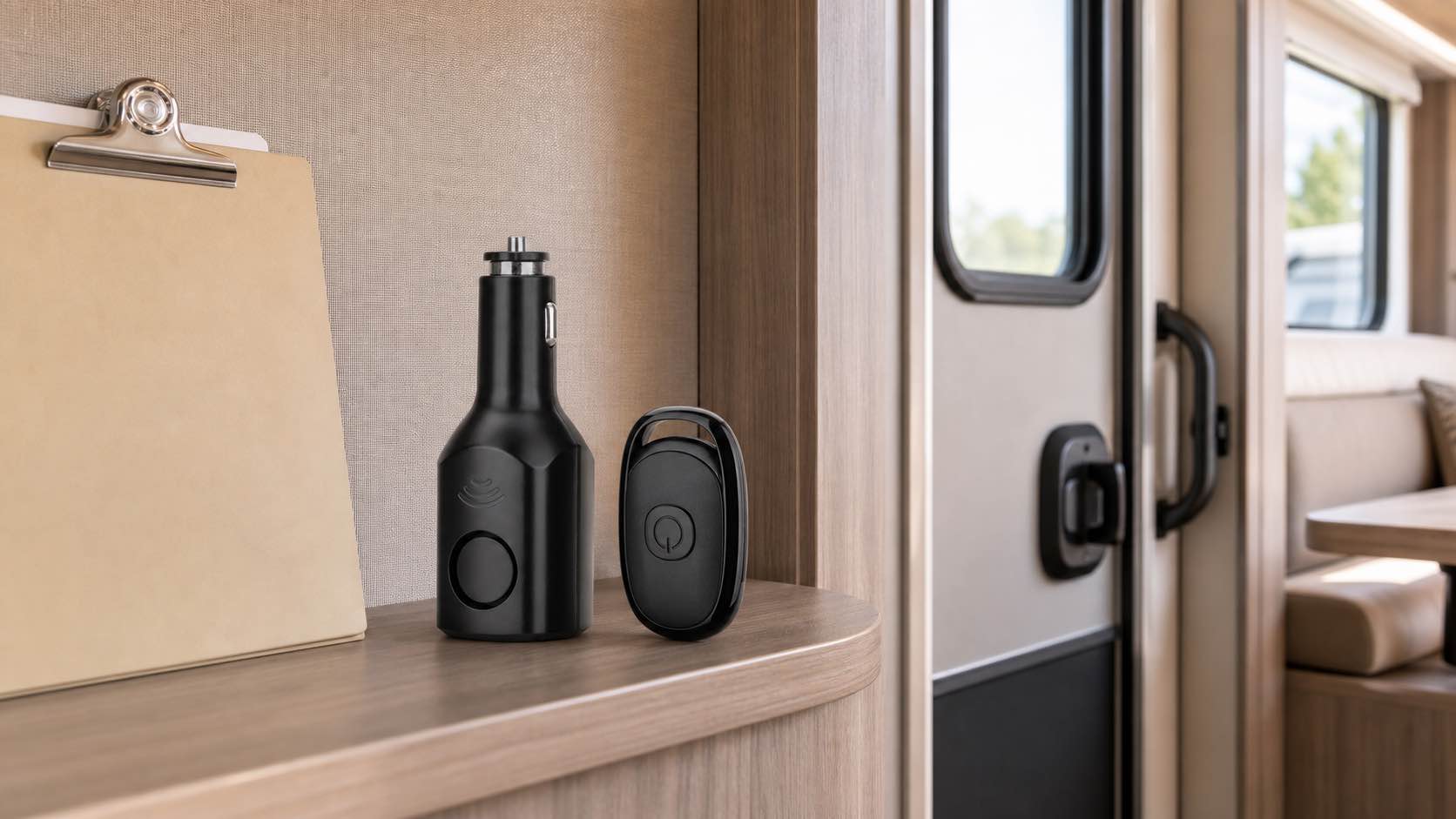
The Eleshine Pro Radar Car Alarm CC001 is a plug-in alarm with radar sensing and remote control. Its manual describes use in a car and also as a simple portable alarm near an RV, boat, tent, door or another place that needs an audible-alert workflow. B2B buyers should treat these examples as a starting point for sample evaluation, not as a universal security guarantee. Local laws, the property owner's authorization and the intended installation conditions should be checked before resale or deployment.
Start with the intended deployment
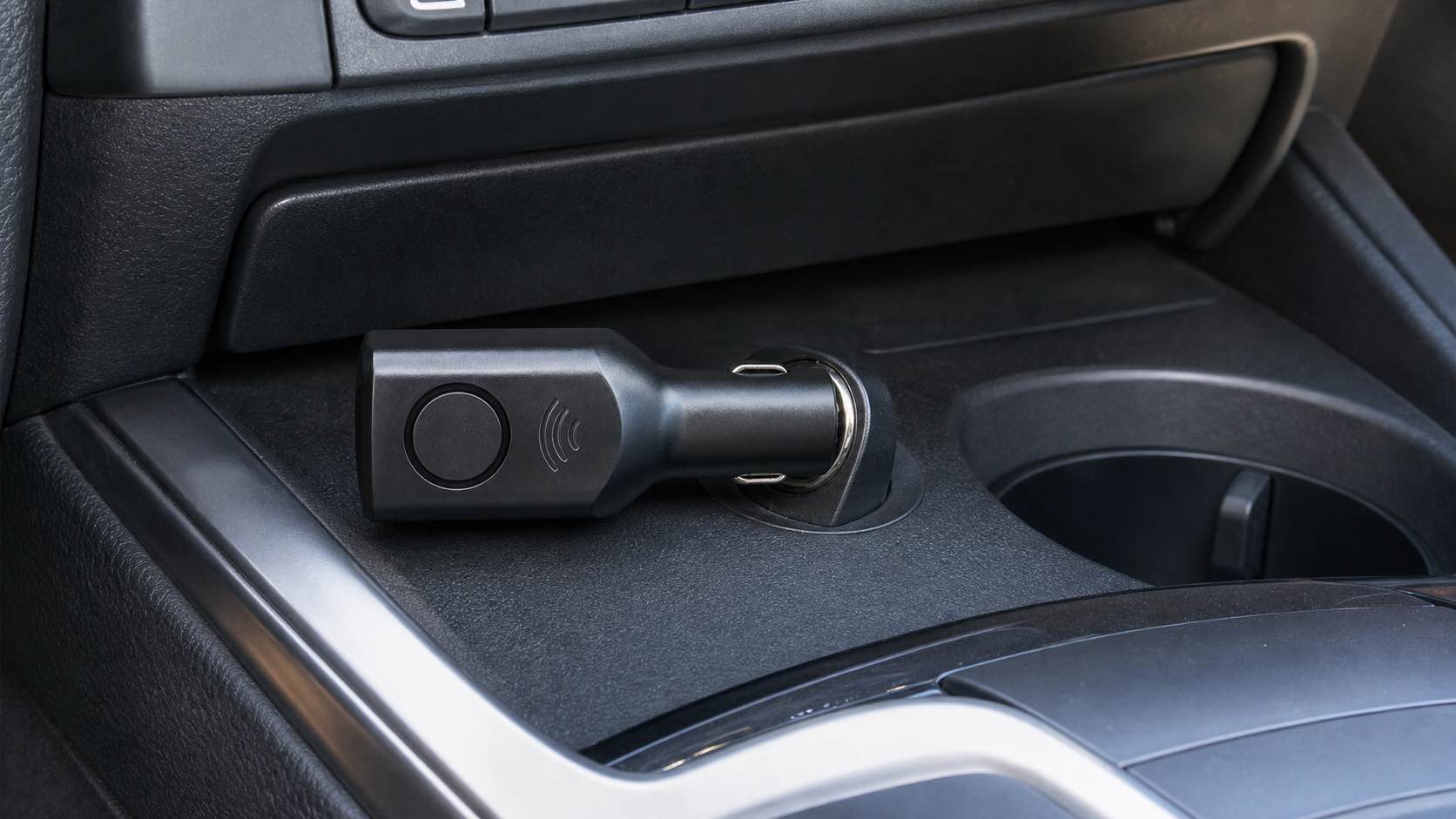
Begin by defining where the distributor expects the alarm to be used. In a car, the CC001 is designed to plug into a 12V cigarette-lighter socket. The manual describes an arming delay after the remote is pressed, followed by an audible alarm when the radar sensing area is triggered. Outside a car, the supplied portable-use ring can be used for a simple placement workflow. The product should be used in a dry, suitable location and tested with the exact vehicle or property setup before it is added to a catalogue.
For a vehicle-accessory range, give the sample team three clear questions: Does the vehicle have an appropriate 12V socket position? Can the customer reach the remote-control workflow easily? Can the device be positioned without blocking normal vehicle use? These questions are more valuable than a generic claim about compatibility. See the Pro Radar Car Alarm category for the active product family, then confirm the CC001 configuration with a physical sample.
Evaluate radar sensing as a placement decision
Radar and PIR motion sensing should not be treated as interchangeable. PIR normally responds to infrared changes associated with movement and heat, while the CC001 manual positions radar sensing as a useful approach for vehicle environments where metal and glass can affect a basic PIR setup. That does not mean that radar works equally well in every cabin, RV or portable location. It means the buyer should test sensitivity, false triggers and the real detection area in the intended placement.
The CC001 manual provides reference detection distances for its described use modes: approximately 1.5 metres inside a vehicle and up to 8 metres outside a vehicle. These are product-manual references, not fixed promises for every environment. Interior materials, nearby movement, placement height, closed doors, power condition and local noise can change the user experience. A distributor should record its own approved test setup before publishing a range or performance statement.
Test the full user workflow, not only the alarm sound
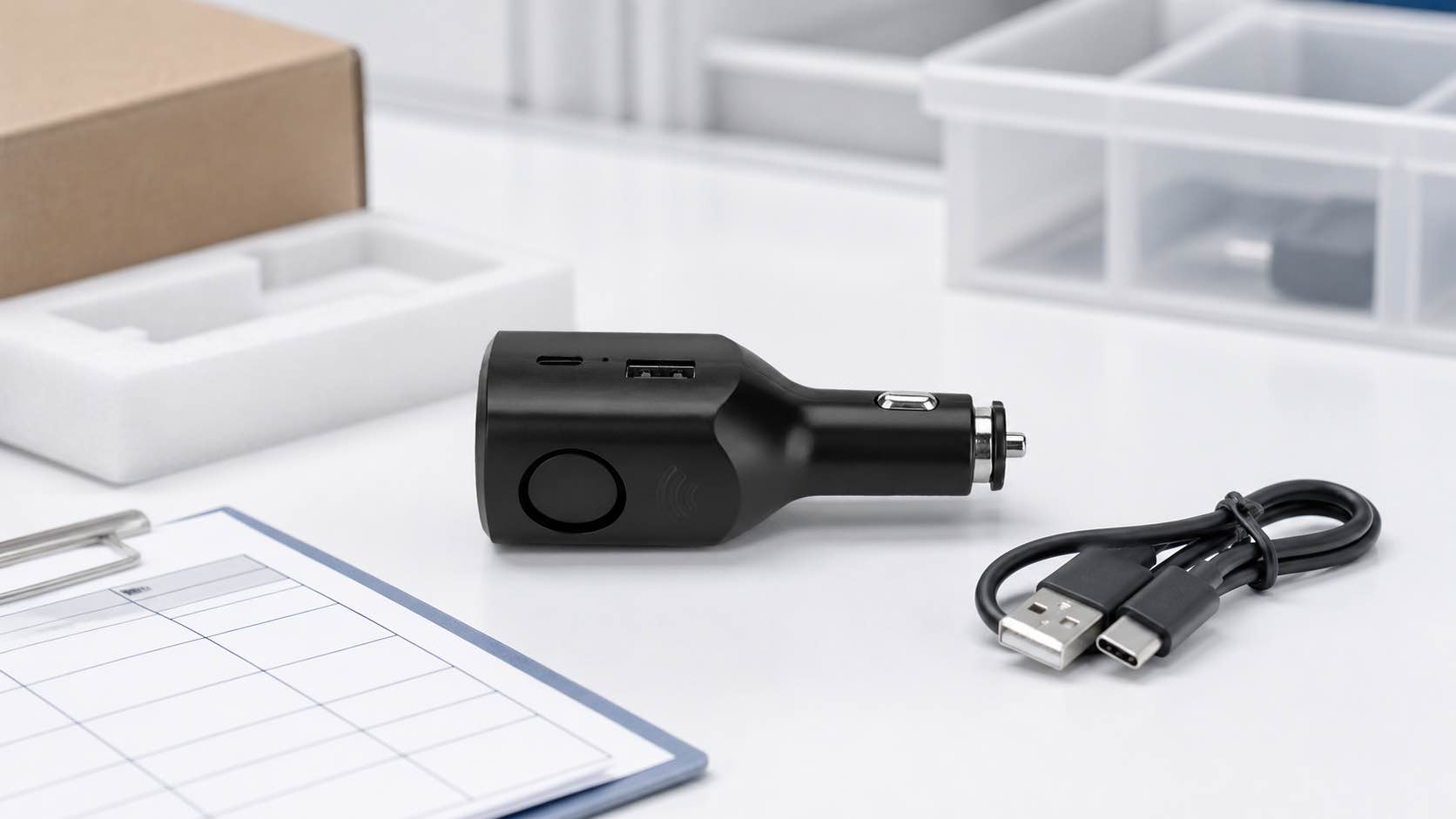
A buyer sample should follow the same sequence that an end user will follow. Charge the device through its Type-C port, check the charging indication, fit it in the intended vehicle or portable position, arm it with the remote and wait through the stated arming delay. Then test the alarm response at agreed sample distances and verify how a user disarms the unit. The in-box review should also confirm the alarm device, remote control, USB cable, portable-use ring and manual.
CC001 also includes a USB port. Buyers should confirm its role and the full charging workflow from the current manual and physical sample rather than inferring extra functions from the port. The manual does not describe GPS tracking. Do not market the CC001 as a GPS alarm, a tracking product, a connected car device or a replacement for a professionally installed vehicle-security system.
Plan an honest channel offer
For a wholesaler or private-label buyer, the strongest offer is often a straightforward one: a compact radar car alarm with remote control, a defined vehicle-socket use case and a portable-use option that has been sample tested. Avoid adding claims that the manual does not support, including waterproof performance, fixed protection coverage, all-vehicle compatibility, certification status, a guaranteed standby period or GPS functionality.
An RV, boat or tent can be a potential portable-security application only after the buyer has confirmed placement, power and local use conditions. The purpose is to create an audible alert for authorized property protection, not to encourage confrontation or covert monitoring. Related B2B buyers can review the broader Eleshine product range when building a vehicle-accessory or portable-security assortment.
Prepare a distributor sample checklist
- Confirm the target use: car interior, RV interior, boat cabin, tent entry or authorized doorway.
- For vehicle projects, confirm the 12V socket position and whether it suits normal use.
- Test charging time and the charging-indicator behaviour with the supplied cable.
- Test remote arming, the arming delay and disarming sequence.
- Test radar response with the actual cabin or portable placement, not only in an open showroom.
- Record the approved placement and the conditions used for any distance or standby statement.
- Check that the product copy excludes GPS, waterproof and universal-compatibility claims unless separately verified for the exact SKU.
- Confirm packaging, branding and localized instructions only after the approved sample configuration is fixed.
Build repeatable B2B support
Once a sample is approved, keep the configuration stable: product model, expected use environment, package contents, user instructions and approved product claims. A private-label project can then discuss logo, carton and manual requirements without changing the underlying sample assumptions. Eleshine is a Shenzhen-based B2B security-electronics supplier established in 2009. Learn more about Eleshine, or contact our team with your target market, sample purpose, expected quantity and packaging requirements.
FAQ
What should a distributor test first on a radar car alarm?
Test the exact intended placement, power connection, remote arming and disarming workflow, and realistic radar response in the planned vehicle or portable environment. Do not approve a product only from an open-bench demonstration.
Is the CC001 a GPS tracker?
No. The current CC001 manual does not describe GPS tracking. Product pages, packaging and sales conversations should not position it as a tracking device.
Can the same alarm be used in a car and an RV?
The manual lists car and portable-use examples. Each vehicle or interior placement should still be sample tested for socket position, mounting, sensitivity, power and normal user access before it is offered commercially.
How should buyers use the listed detection distance?
Treat the manual figures as evaluation references. Record the exact test conditions because cabin materials, placement, nearby movement and the environment can affect the result.
Can a private-label seller claim that the product prevents theft?
No. It is more accurate to describe it as an authorized, audible-alert product with a remote-control and radar-sensing workflow. Security outcomes depend on the placement, environment and the user response.
How to Choose a Dual-Lens Helmet Action Camera for B2B Sports and Riding Projects
How Distributors Can Bundle Battery Boxes with Compatible Security Devices