How to Choose a Dual-Lens Helmet Action Camera for B2B Sports and Riding Projects
For distributors, outdoor retailers and private-label brands, choosing a helmet camera is not only a resolution decision. The practical question is whether the camera, mounting system and recording workflow can become a reliable product line for real cycling, motorcycle and outdoor-sports buyers. This guide explains how to evaluate the S50+ dual-lens helmet action camera as a B2B sample, from recording modes through mounting, storage and after-sales readiness.
1. Start With the Recording Mode Your Customers Will Actually Use
A strong product brief distinguishes between single-camera and dual-camera use instead of treating every resolution number as interchangeable. The S50+ offers 4K front recording in its single-front-camera mode, while its dual-camera mode records 1080P + 1080P at 30 FPS. For a buyer, this means the sample test should define the expected riding workflow first: front-only footage, simultaneous front-and-rear coverage, or short event clips for social and retail content.
Ask the supplier to demonstrate the selected mode, file naming, playback and memory-card behavior using the intended buyer scenario. A 170-degree ultra-wide-angle lens and fisheye-correction support can be useful for riding perspectives, but the real acceptance point is whether the captured view suits the target helmet position and route type. Buyers building a broader catalog can compare the S50+ with the active wearable action camera range rather than selecting by a headline number alone.
2. Check Helmet Fit, Mounting Stability and Daily Operation
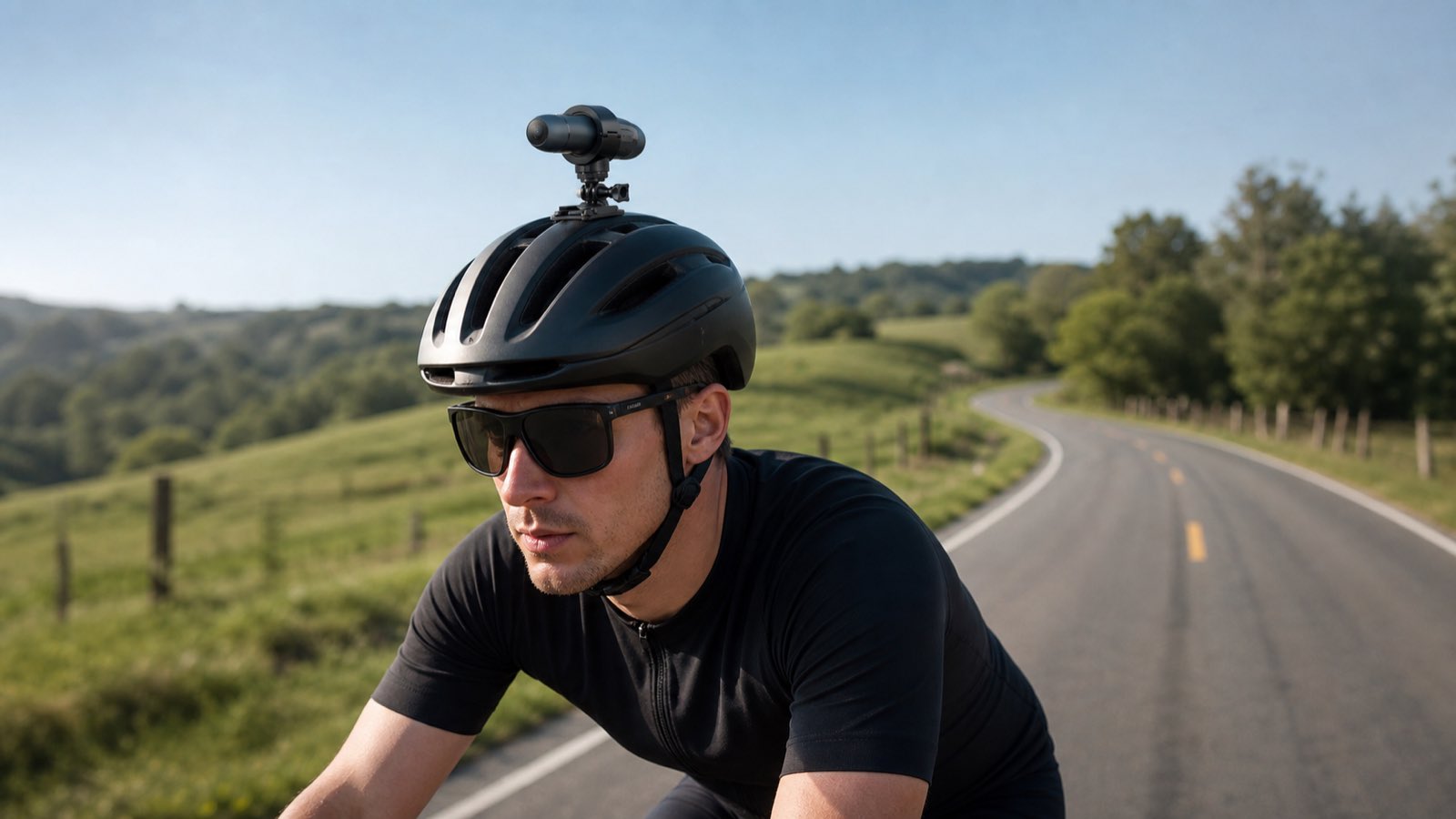
Mounting compatibility deserves an early sample check. Confirm that the supplied base, rotating base and helmet-mounting accessories fit the intended cycling or motorcycle helmet surface. The evaluation should include normal vibration, repeated attachment and removal, camera-angle adjustment, and whether the operator can use the controls while wearing gloves.

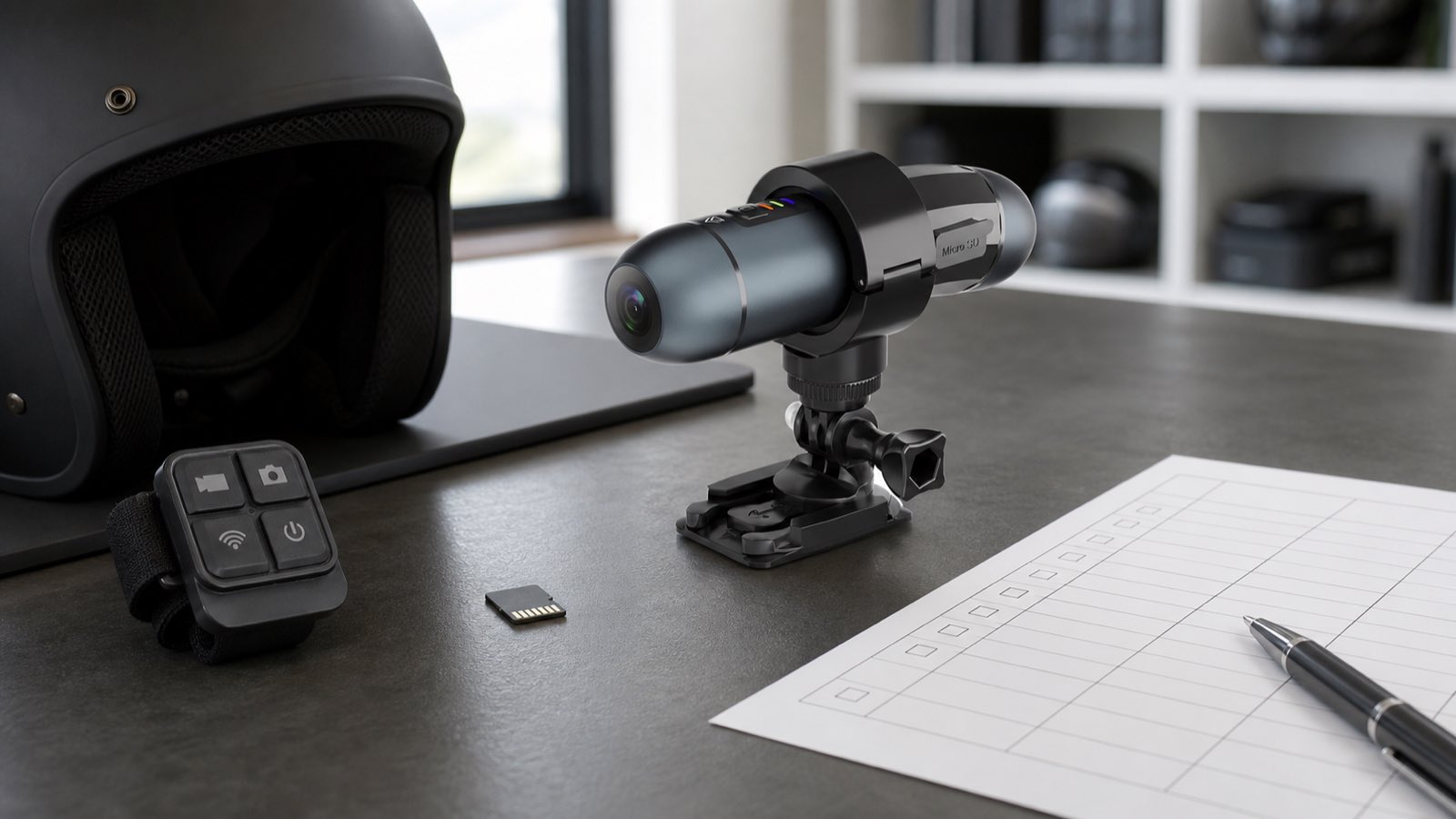
The S50+ includes a wireless wrist remote. A distributor should test whether the remote commands are clear, dependable and easy to explain in the final user manual. This is also the time to inspect the practical package: camera, remote, mounting parts, adhesive pads, USB Type-C charging cable and printed documentation. For adjacent product-line planning, the RAW2 riding camera recorder helmet is a useful related reference point for retailers that want multiple riding-camera form factors.
3. Test the Field Workflow, Not Only the Studio Sample
A desk demonstration cannot replace a short route test. Run the intended recording mode on a safe, authorized cycling or motorcycle route, then review stability, framing, audio, file transfer and the operator experience. The S50+ uses MP4/H.264 recording, supports 1-, 3- and 5-minute loop-recording options, and supports emergency lock. Test those settings in the way the target channel will explain them to end users.
Storage is part of the same workflow. The model supports Micro SD cards up to 512GB; test with the card class and capacity planned for the sales channel. The published 2400mAh battery and up-to-3.5-hour recording-time reference should be treated as a sample-evaluation benchmark, not a universal promise, because actual runtime changes with mode, Wi-Fi use, temperature and recording conditions.
4. Evaluate Environmental and Connectivity Requirements Carefully
The S50+ is specified with IP66 protection. For B2B communication, state the rating accurately and keep it separate from claims about every weather situation or user installation. Confirm mounting, charging-port closure and memory-card-cover handling in the intended operating routine before making a channel promise.
Its 2.4 GHz Wi-Fi connection and RoadCam app workflow can support preview, download and sharing. During a sample review, check the onboarding steps with the customer-facing phone versions and local network conditions that matter to your market. Buyers who need another connected riding-camera option can also review the WiFi Bluetooth helmet action camera as part of a differentiated product assortment.
5. Build a Distributor Sample-Evaluation Checklist
Before approving a first order or private-label program, record the results in one repeatable checklist:
- Verify the intended single-front 4K and dual 1080P + 1080P modes.
- Check the helmet mount, rotating base and adhesive-pad fit on the planned helmet types.
- Test framing, lens angle, vibration stability and control access during a lawful route test.
- Confirm Micro SD recording, loop-recording behavior, emergency lock and file playback.
- Check Wi-Fi onboarding, remote control and customer-facing setup instructions.
- Review the IP66 rating, packaging, logo placement and user-manual requirements for the target market.
6. Plan the Product Line and OEM/ODM Conversation
For an importer or private-label brand, a sample decision should lead to a defined rollout plan: target user, recording mode, included mounting accessories, packaging language, instruction needs and local compliance review. Eleshine has supported B2B security and electronics buyers since 2009. Learn more about the company on the Eleshine About page, then use the product page and your sample feedback to discuss an appropriate OEM/ODM configuration.
Ready to evaluate the S50+ for a sports, motorcycle or cycling assortment? Send your target market, expected channel, preferred recording mode and customization requirements through Eleshine Contact. The team can align the proposed sample and documentation discussion with your actual B2B program.
Frequently Asked Questions
Does the S50+ record 4K in dual-camera mode?
No. The S50+ specification distinguishes the modes: the front single-camera mode is listed as 4K, while dual-camera mode is listed as 1080P + 1080P at 30 FPS. Buyers should test the mode they intend to sell.
What should a distributor test before approving a helmet action camera?
Test mounting fit, angle adjustment, route stability, recording modes, Micro SD workflow, remote operation, Wi-Fi onboarding, packaging and the clarity of customer-facing instructions.
Is IP66 the same as a guarantee for every outdoor condition?
No. IP66 is the stated product rating. Buyers should verify the intended mounting and operating conditions, follow the user manual, and review local product and marketing requirements before making a channel-specific claim.
What is included in an S50+ sample evaluation?
The published packing list includes the host camera, wireless wrist remote, main mount, rotating base, curved mount, flat mount, adhesive pads, USB Type-C charging cable and user manual. Confirm the final package for the selected order configuration.
B2B Security Camera Sourcing Guide: From Product Selection to OEM/ODM Orders
How to Choose a Radar Car Alarm for Car, RV and Portable Security Projects