GPS Tracker Detection Guide: Magnetic Tracking Risks & Identification (2025)
TL;DR
Magnetic GPS trackers are often hidden on vehicles or metal surfaces without visible wiring.
GPS tracker detection focuses on identifying abnormal magnetic fields caused by these devices.
This guide explains detection principles, usage scenarios, and practical limits.
Introduction
GPS tracker detection refers to the process of identifying unauthorized tracking devices that may be covertly attached to vehicles, personal belongings, or assets.
This guide focuses specifically on magnetic GPS trackers, not cellular surveillance systems or software-based location tracking.
As tracking hardware becomes smaller and easier to conceal, unauthorized monitoring has become a growing concern for individuals, executives, and businesses managing mobile assets.
This article explains how magnetic GPS tracker detection works, where it is most effective, and how it is applied in real-world security scenarios.
How Magnetic GPS Tracker Detection Works
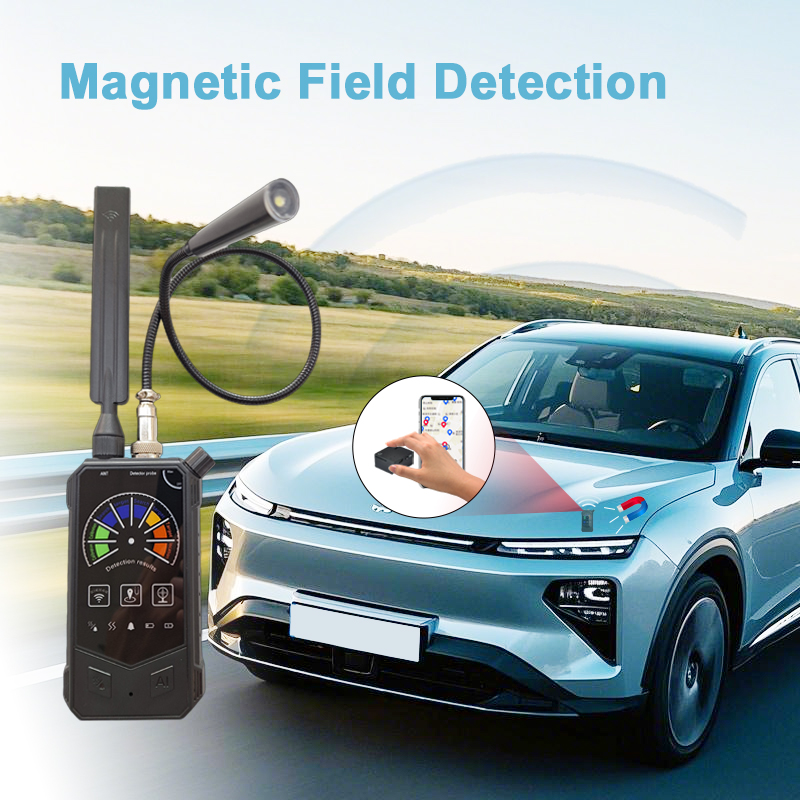
A magnetic GPS tracker typically relies on built-in magnets to attach securely to metal surfaces such as vehicle frames or storage containers. These magnets create magnetic field anomalies that differ from normal environmental magnetic patterns.
GPS tracker detection devices scan target areas to identify these abnormal magnetic signatures. This method is especially useful when trackers are hidden under vehicles, inside compartments, or within bags where visual inspection alone is insufficient.
Because magnetic signatures remain detectable even when devices are powered off, magnetic-based detection adds an additional layer of security beyond signal scanning alone.
[? Internal Link Opportunity: GPS Tracker Detector Product Page]
Detection Characteristics Overview
| Parameter | Detection Focus | Notes |
|---|---|---|
| Detection Target | Magnetic GPS tracker | Magnet-based attachment |
| Detection Method | Magnetic field anomaly | Independent of GPS signal |
| Inspection Area | Vehicle undercarriage inspection | Common hiding location |
| Device Type | Portable detection device | Handheld operation |
| Skill Requirement | Non-technical users | Simple movement-based scan |
| Risk Addressed | Unauthorized tracking risk | Privacy and asset security |
| User Group | Fleet security management | Commercial use |
| Application Scope | Covert tracking identification | Personal & professional |
Practical Usage Scenarios
Scenario A: Personal and Vehicle Privacy Protection
Individuals can use GPS tracker detection to inspect vehicles, backpacks, or luggage for unauthorized devices, reducing the risk of covert monitoring in daily life.
Scenario B: Fleet and Executive Security
For fleet operators or executives, routine detection checks help identify unauthorized trackers that could expose travel routes, asset locations, or sensitive operations.
[? Internal Link Opportunity: Vehicle Security Inspection Guide]
Frequently Asked Questions
What is GPS tracker detection used for?
GPS tracker detection is used to identify unauthorized tracking devices, especially magnetic GPS trackers hidden on vehicles or personal items.
Can magnetic GPS trackers be detected when powered off?
Yes. Because detection focuses on magnetic field anomalies, trackers can often be identified even when they are not actively transmitting signals.
Is GPS tracker detection difficult to perform?
No. Most portable detection devices are designed for non-technical users and require only basic scanning movements.
Conclusion
GPS tracker detection is an important part of modern personal and operational security, particularly as magnetic tracking devices become easier to conceal.
By understanding detection principles and application limits, individuals and organizations can better protect their privacy and assets.
For further evaluation, product information, or B2B cooperation, related Eleshine detection resources can be reviewed.
IR940 Infrared Detector: Professional Invisible Camera Finder
Reclaim Your Personal Space with EleShine’s Advanced Signal Detection
Related Article