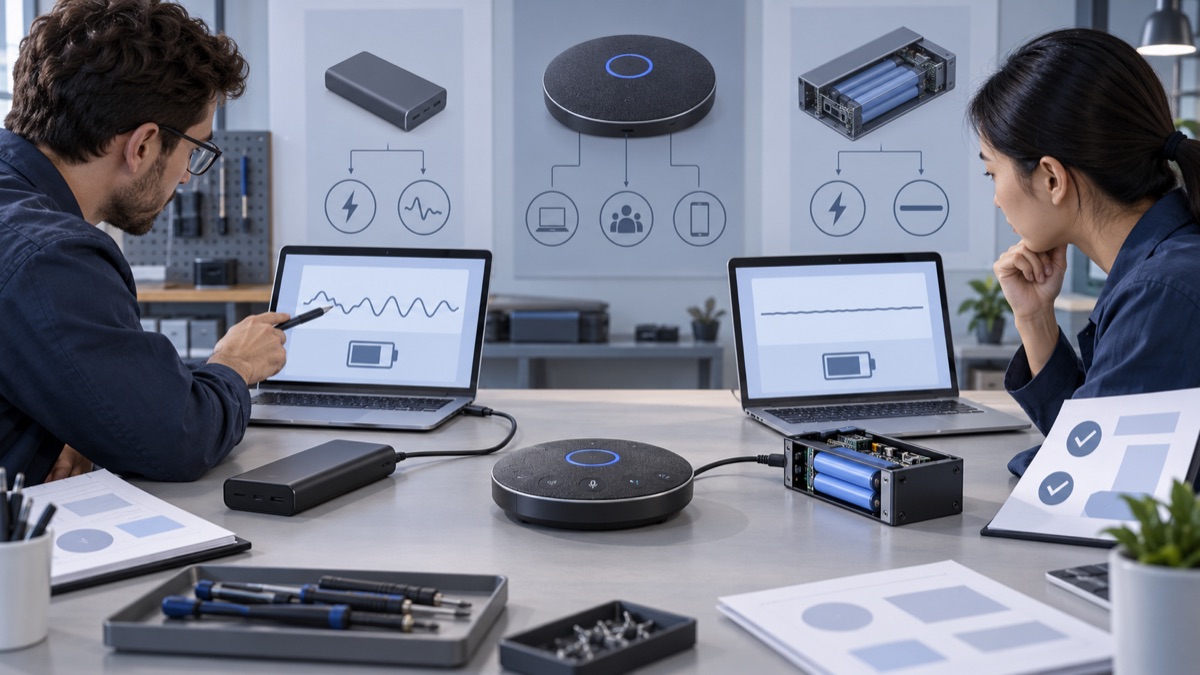
Battery Accessory Safety for Audio Devices: B2B Checklist
Updated 13 October 2026. Illustrations are conceptual and do not show a specific Eleshine product or tested configuration.
Quick answer: Before pairing a battery accessory with an audio device, ask for the current manufacturer-approved electrical and charging specifications. Inspect the enclosure and connector, then test the exact combination under the customer's intended, visible and authorized workflow. Do not infer a safe connection or operating duration from cell capacity alone.
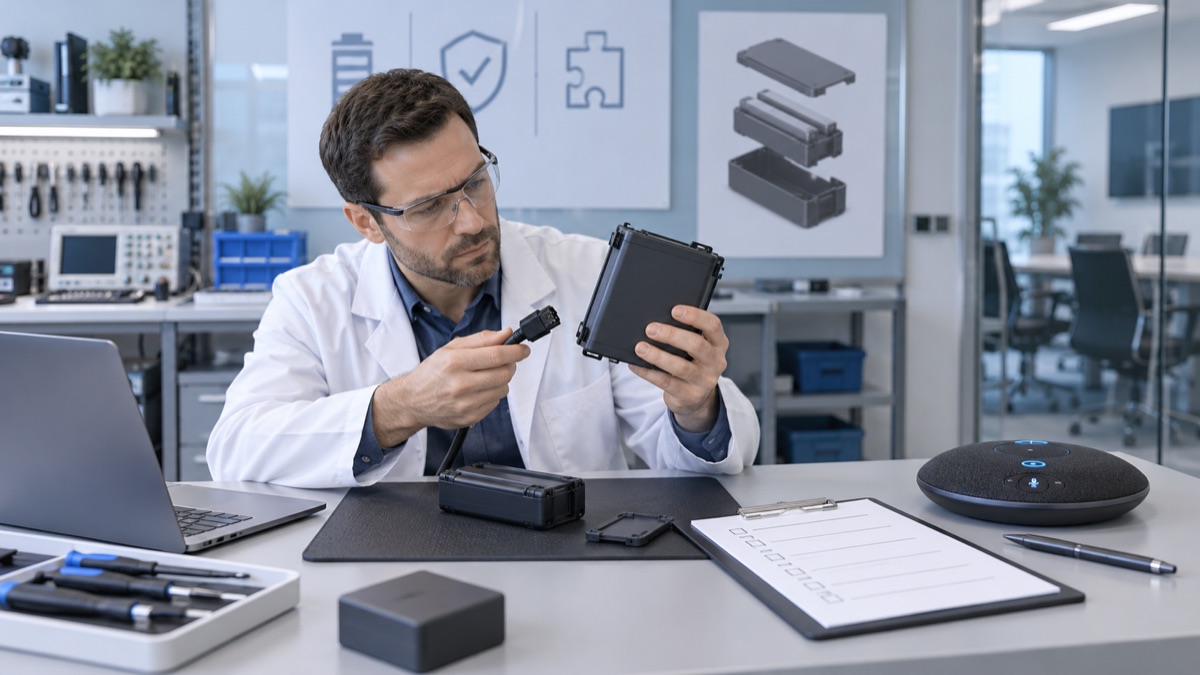
What a B2B buyer should verify first
- Approved pairing: Identify the exact device and accessory versions. Obtain the supported connector, voltage, polarity, current range and charging path from the current supplier documentation.
- Cell and enclosure safety: Ask which cell type, charger, protection features and replacement procedure are approved. Check that the housing, cable and connector are undamaged. Do not open, modify or bridge a pack to make it fit.
- Operating environment: Confirm the temperature and storage limits stated for the actual assembly. Plan handling and inspection around those limits; a generic calculation is not a thermal test.
- Service and traceability: Record supplier, batch, accessory version and safety instructions. Make it easy to withdraw a damaged or incompatible pack.

Sample acceptance test
Document the device, firmware, accessory, cable and cell condition before testing. Observe normal startup, active use, idle behavior, reconnection and charging according to the approved instructions. Note interruptions, unusual heat, connector movement and any warning indicator. Repeat the test under a representative workload. Share the conditions and raw observations with the buyer; do not transform a theoretical battery-capacity calculation into a guaranteed field run time.
Procurement questions to send a supplier
- Which current specification identifies this accessory as compatible with the named device?
- What charger, cells and handling procedure are approved for this configuration?
- What protection and inspection steps are documented?
- What test conditions support any stated operating-time range?
- How are damaged units, revisions and replacement parts tracked?
Privacy belongs in the operating plan
Longer available power does not justify unattended or undisclosed collection. For workplace audio documentation, set a legitimate purpose, inform participants as required, limit access and retention, and obtain local legal review where needed. Our responsible audio documentation checklist explains these questions. For an external-power selection method, see the buyer test checklist. For current product and accessory information, contact Eleshine. This page is general procurement guidance, not a safety certification or legal opinion.
Power Bank Auto-Off for Audio Devices: Low-Load Test Protocol
Related Article